
It's sticky, chewy, and the perfect base for all your favorite Japanese dishes-Sushi Rice is a pantry staple you'll use again and again. Whether you're making homemade rolls, poke bowls, or even mango sticky rice, this recipe gives you fluffy, flavorful rice every time.
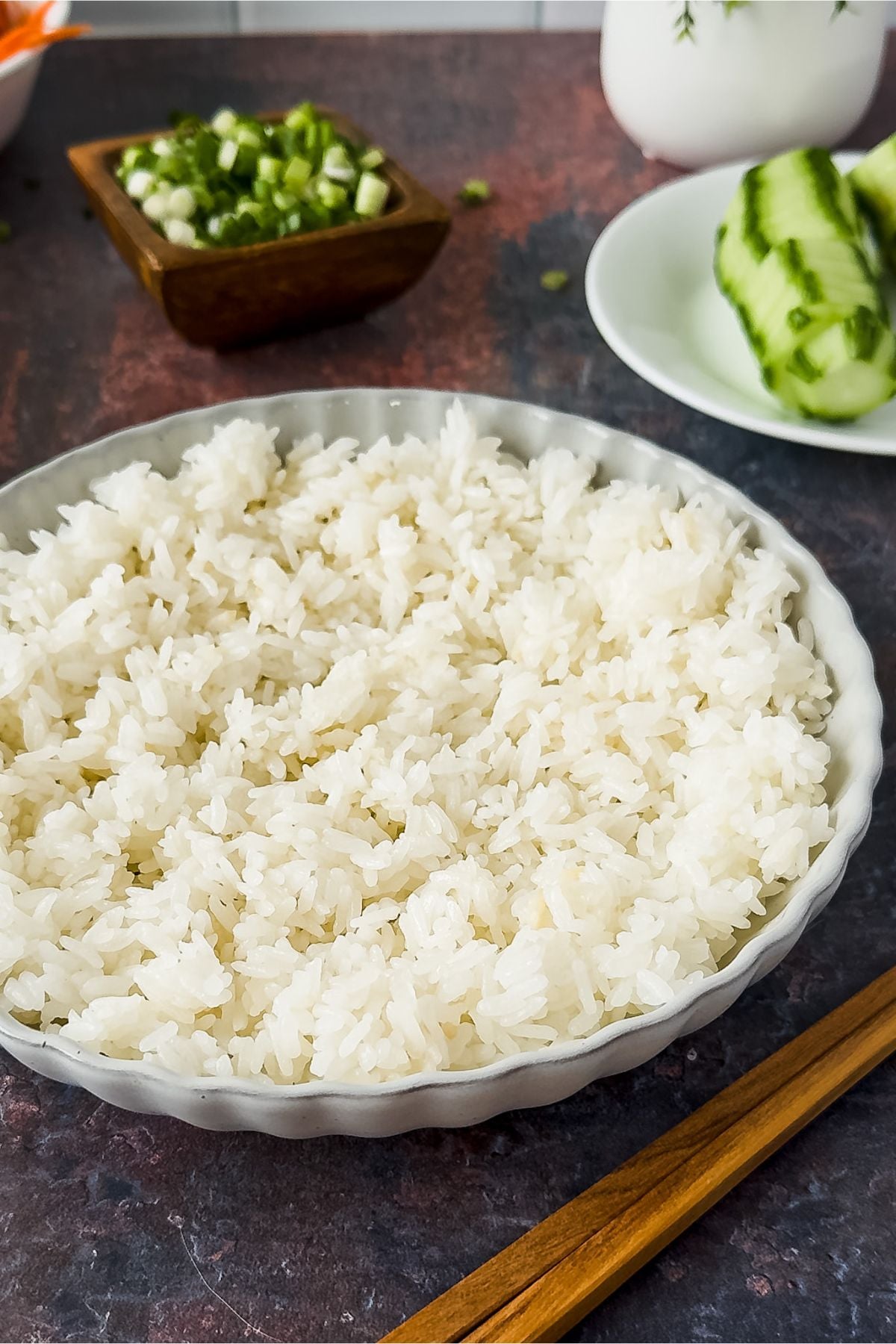
Why This Recipe is the Best
We tested this recipe over and over to make sure it works with different cooking methods, including the stovetop and Instant Pot. It's lightly seasoned with a sweet and tangy rice vinegar mixture that gives it that signature sushi rice flavor, and it works beautifully with all kinds of sushi-grade fish, vegetables, and toppings. While it's delicious on its own, this rice also holds its texture when shaped into rolls or rice balls, making it super versatile. You can even make it with short-grain brown rice or black rice, though the texture is a little different. We also include optional ingredients like mirin and kombu (kelp) to give it a more authentic Japanese flavor.
We use this sushi rice recipe as the base to our tasty Salmon Teriyaki Bowls.
Jump to:
Key Ingredients
Here are a few things to keep in mind when gathering your ingredients.
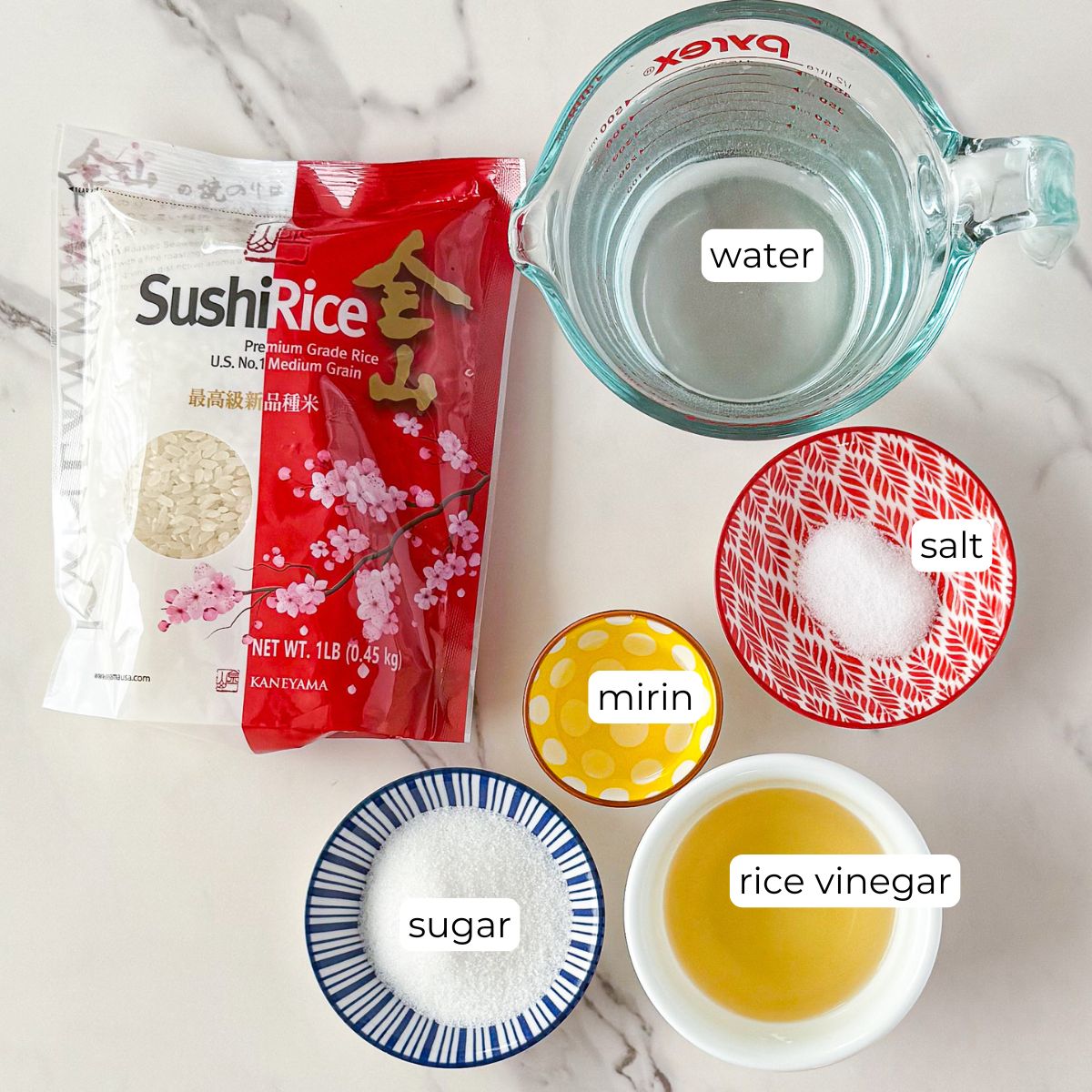
- Short Grain Rice - The best rice for sushi is Japanese short grain white rice. Calrose rice is widely available and works great, but if you can find a Japanese brand, even better.
- Rice Vinegar - Adds the classic tang and flavor you expect in sushi rice. Look for plain rice vinegar, not seasoned.
- Sugar & Salt - These balance the acidity of the vinegar and give the rice that restaurant-style flavor.
- Mirin - This sweet rice wine is totally optional but adds a deeper umami flavor. You won't be disappointed when you try it!
- Kombu (Kelp) - If you have it, toss a small strip into the pot as the rice cooks. It adds a subtle, savory note that makes the rice taste more traditional. If we don't have it on hand, we don't use it, though, and still have great results.
How to Make Sushi Rice
Use these step-by-step instructions and photos as a guide to get the best results.
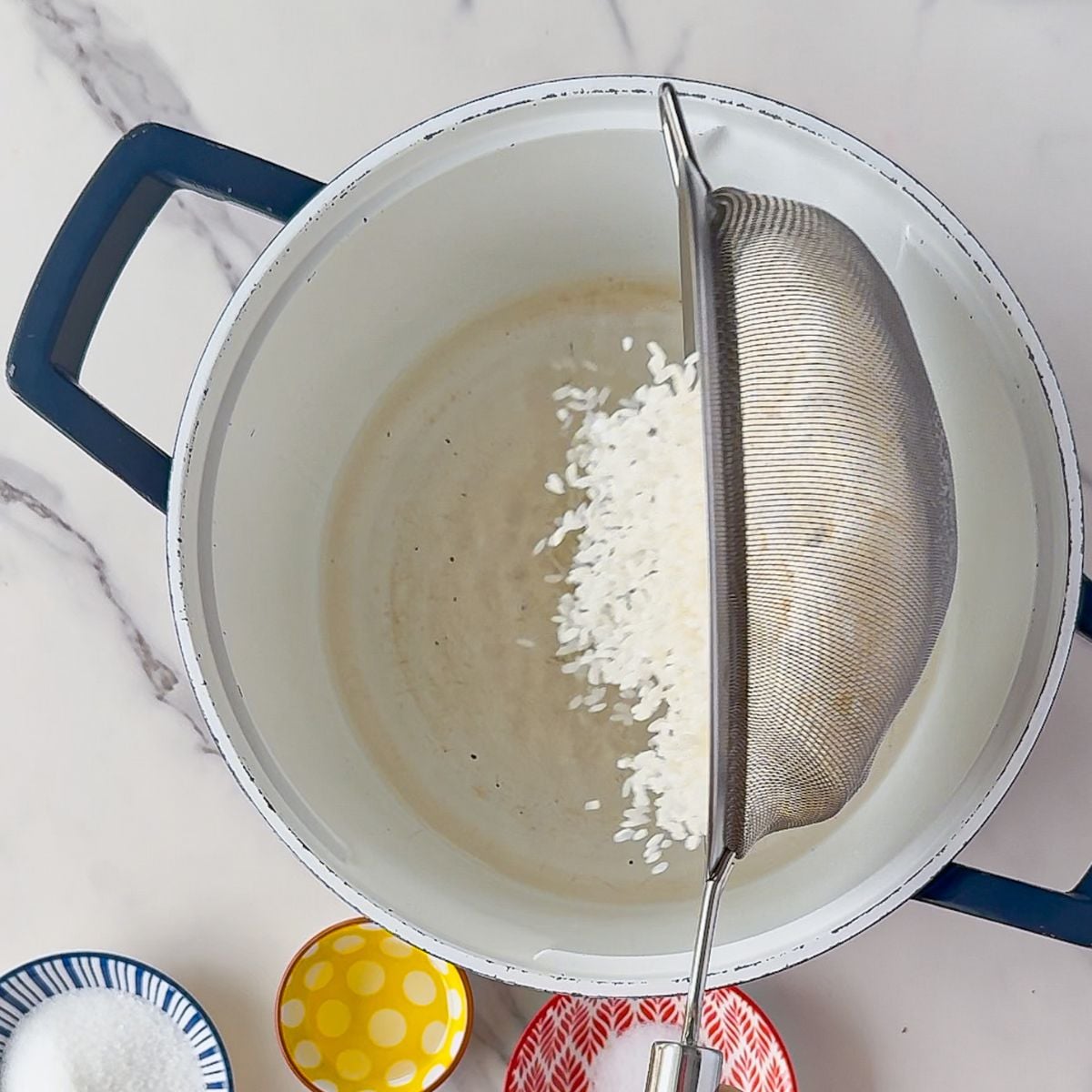
- Rinse and drain the rice. Drain for 30 minutes but ideally 60 minutes.
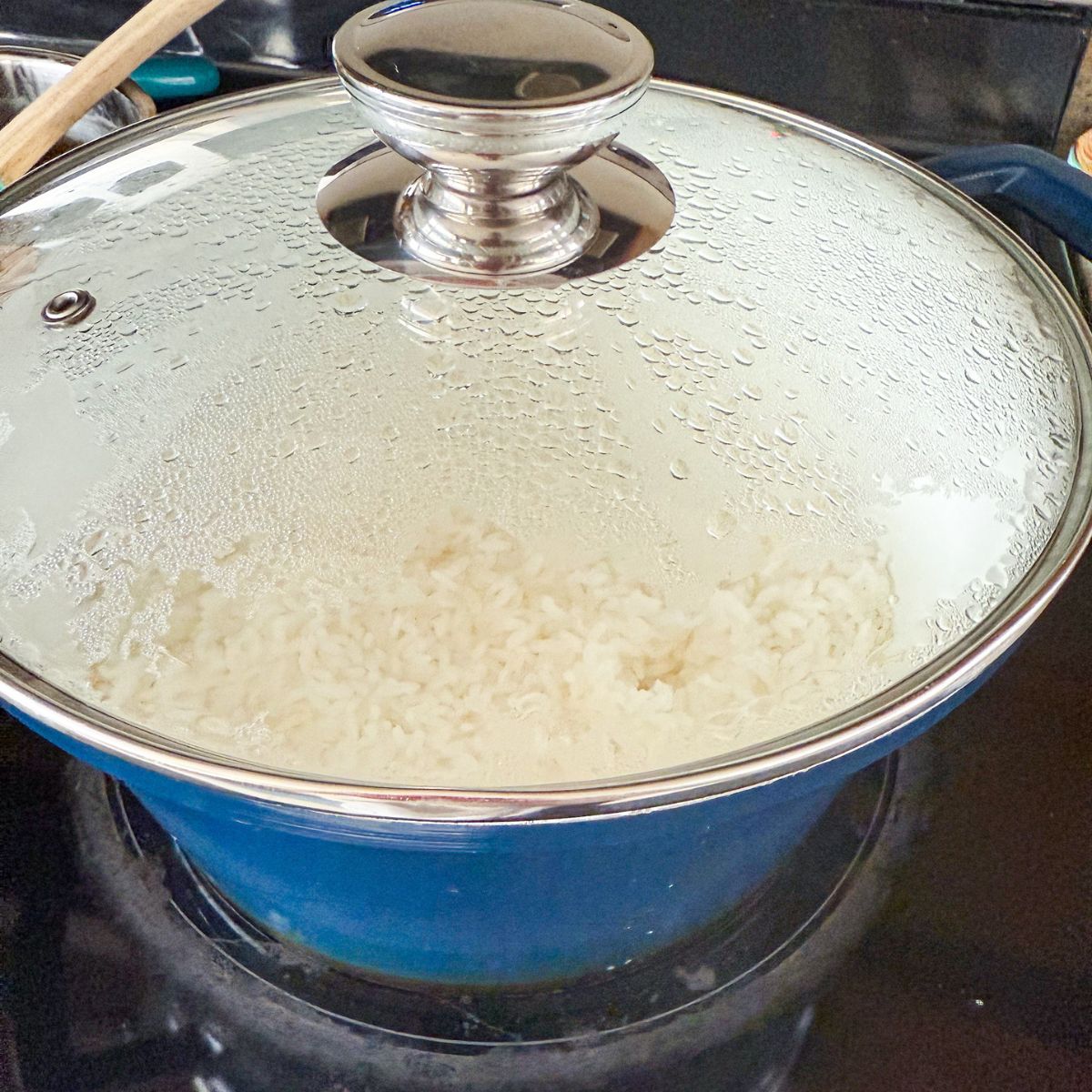
- Place rice and water in a pot on the stovetop and bring to a boil. Reduce the heat and cook for 15 minutes with the lid on.
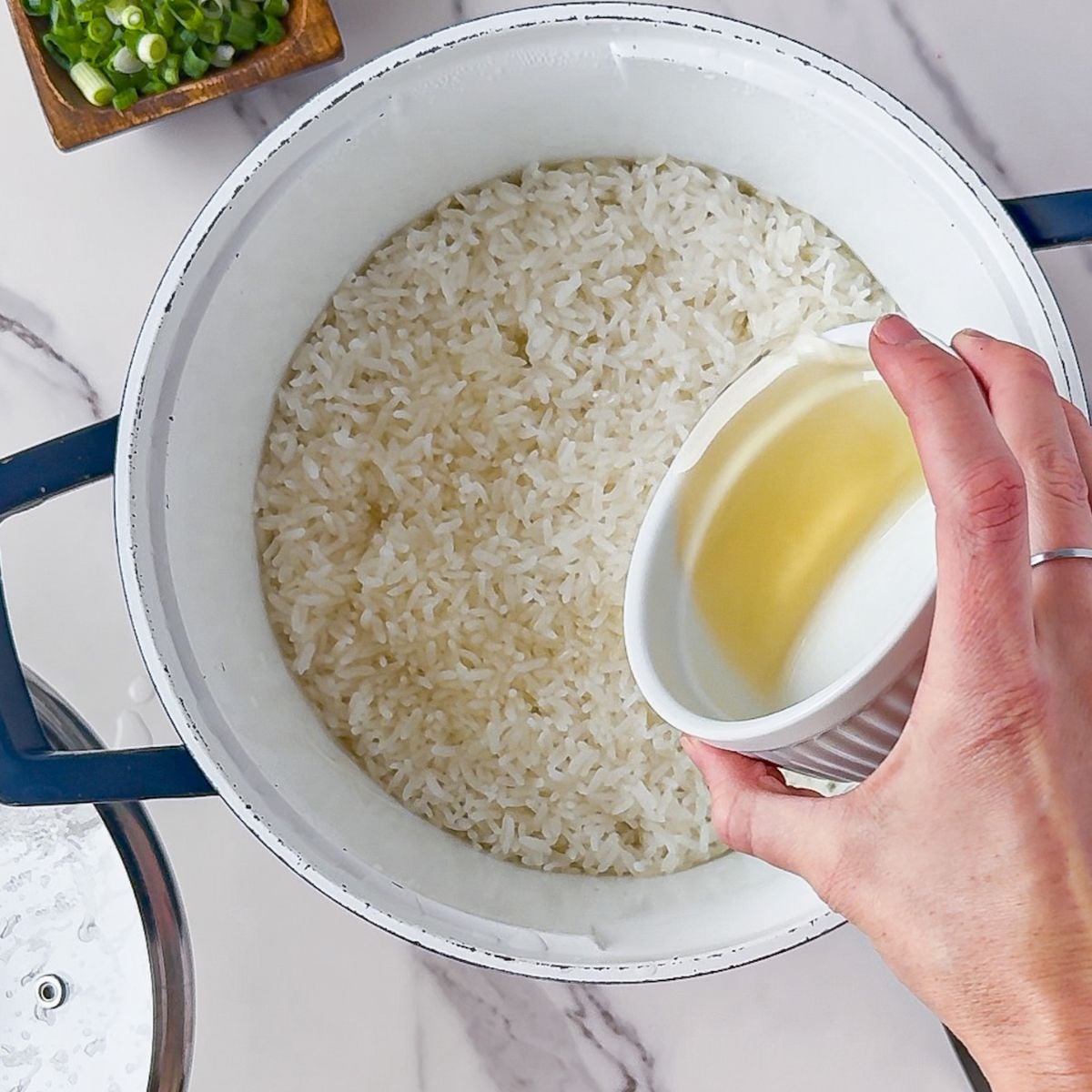
- While the rice cooks, combine the rice vinegar, sugar, and salt. Microwave for 30 seconds. Drizzle rice vinegar mixture over the top of cooked rice and fluff with a fork to loosely combine.

- Spread the mixed rice across a baking sheet to cool. Once cooled it's ready to use, about 10 minutes.
Helpful Hints
Always rinse your rice before cooking-this is one step you don't want to skip. If you're using a rice cooker or Instant Pot, be sure to follow the water-to-rice ratio for your appliance. Don't skip the seasoning mixture, even if you're not making sushi rolls; it gives the rice its signature flavor.
Top Tip
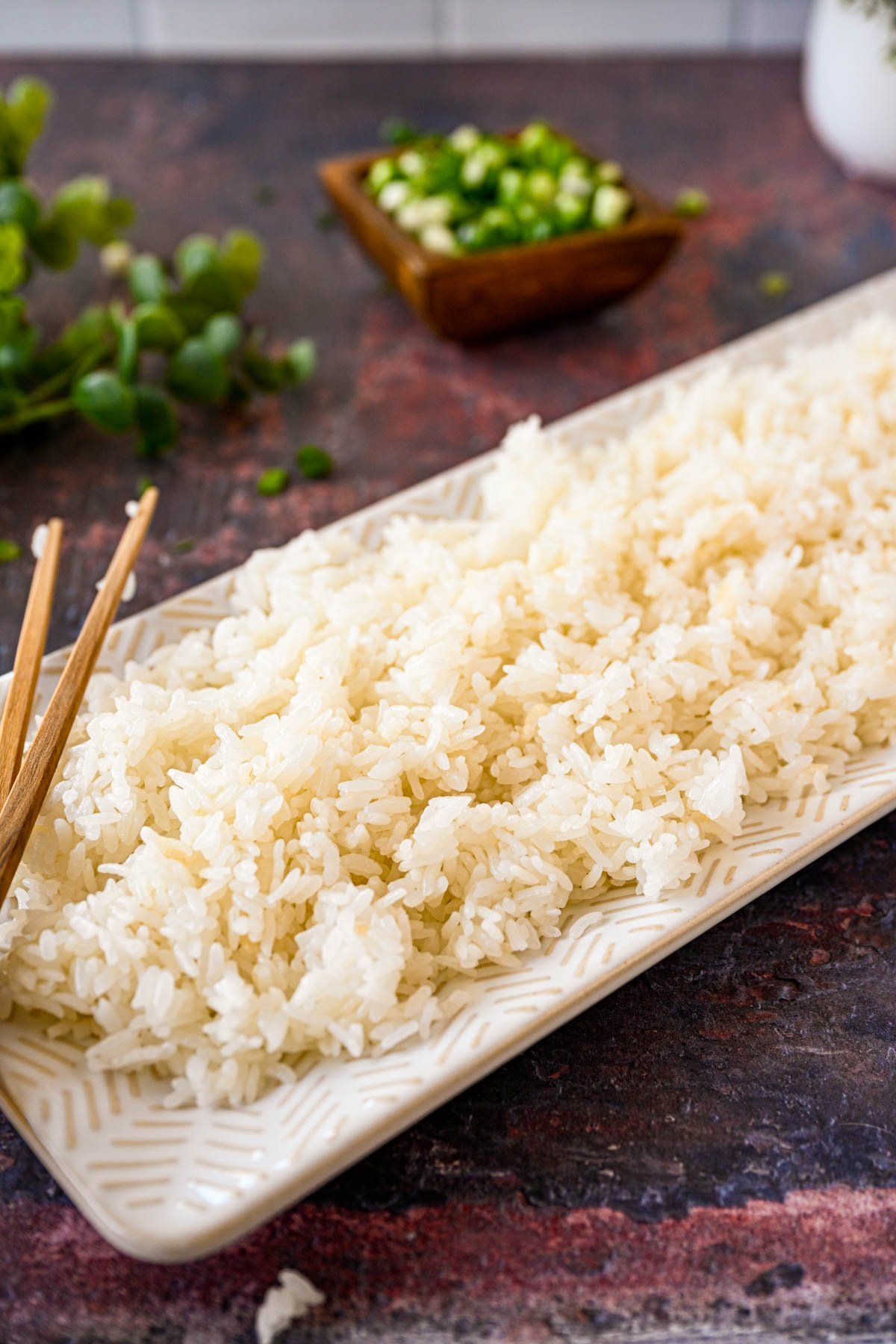
Let the rice cool to room temperature before making sushi rolls or rice balls. Warm rice is too soft and sticky to shape properly.
Recipe
Sushi Rice Recipe
Ingredients
- 2 cups sushi rice short grain Japanese rice
- 2 cups water
- ¼ cup rice vinegar
- 2 Tablespoons sugar
- 1 teaspoon salt
- 1 Tablespoon mirin optional
- 1 kelp leaf optional, see note 2 below
Instructions
- Rinse rice in a sieve for 1 minute and set aside to drain well, at least 30 minutes, but ideally 60.

- While the rice is draining or cooking, whisk together the rice vinegar, sugar, salt and mirin in a bowl. Heat in the microwave for 30 seconds and stir again to dissolve the sugar. Microwave again if necessary. Be careful not to bring to a boil. You can also heat the mixture up on the stove, if desired.
- Place rice and water in a pot on the stovetop (or use the rice feature on your instant pot) on high heat, covering with a lid. Bring to a boil and reduce heat. Cook for 15 minutes without removing the lid. After 15 minutes, keeping the lid on, remove from heat and let sit for 10 (but no longer than 15) minutes. Drizzle rice vinegar mixture over the top and fluff with a fork to loosely combine. Spread across a baking sheet to cool, it'll be ready for use after about 10 minutes. Always be careful not mush the rice while handling it. Sushi rice is best used for sushi at around body temperature. Place in a bowl and cover with a damp towel if not using immediately.


Notes
- Mirin is a tangy, acidic and slightly sweet rice wine used in a lot of Japanese cooking. It is completely optional here, but adds a nice flavor if you have some on hand.
- To use the kelp leaf (kombu is recommended), add it in to the water and rice before cooking. It adds a slight aromatic flavor for a more authentic taste.
- Store in an airtight container in the refrigerator for up to 1 week. To reheat sprinkle some water across the top before reheating to keep it moist and prevent it from drying out.
Nutrition
Storing and Reheating Sushi Rice
Sushi rice stores well for meal prep or leftovers! Keep it in an airtight container in the refrigerator for up to 1 week. When reheating, sprinkle water on top and cover it with a damp paper towel or lid. Microwave in short bursts to keep it from drying out.
Substitutions and Variations
Short grain brown rice - Works well with the same seasoning and provides a nuttier flavor and more fiber.
Black rice or purple rice - These make stunning bowls and offer an earthier flavor. Just note they're not quite as sticky.
Cauliflower rice - If you're low-carb, season cauliflower rice the same way and use it in sushi bowls or wraps.
No rice vinegar? Try white wine vinegar with a small pinch of sugar as a quick substitute.
What is Sushi Rice?
Sushi rice is a specific type of short grain Japanese rice that becomes sticky when cooked. It's typically seasoned with a mixture of rice vinegar, sugar, and salt. The texture should be soft, slightly sticky, and easy to shape for sushi rolls, bowls, and more.
Best Rice to Use for Sushi
Short-grain white rice is the gold standard for sushi because of its high starch content and sticky texture. Calrose rice is also a good option. We like using Japanese brands like Koshihikari for the best results. Medium grain can be used in a pinch, but long-grain rice like basmati or jasmine will not stick together and won't work for sushi.
From experience, if you use the wrong type of rice, you won't get the right texture, and it's hard to work with.
Sweet Rice vs. Sushi Rice
Though they might seem similar, sweet rice is different from sushi rice. Sweet rice becomes very sticky and chewy and is often used in desserts like mango sticky rice or mochi. Sushi rice, while sticky, maintains a fluffier texture and is seasoned with vinegar.
Ways to Use Sushi Rice
Instant Pot sushi rice, rice balls, homemade rolls-whatever you choose, this easy sushi rice recipe will be your go-to every time!
- Sushi rolls - Classic rolls, hand rolls, and even inside-out rolls.
- Rice balls - Shape into onigiri or musubi for easy snacks or lunchbox treats.
- Sushi bowls - Top with fish, tofu, avocado, cucumber, and spicy mayo.
- Mango sticky rice - A great use for leftover rice. Reheat and serve with sweet coconut milk and ripe mango slices.
- Rice paper wraps - Use sushi rice inside rice paper rolls for a fusion twist.
- Salmon bowls - Top warm rice with baked or air-fried teriyaki salmon and your favorite toppings.


Andrea says
Love this sushi rice recipe, the rice vinegar is the key!